What We Do
From policy advocacy to grassroots awareness campaigns — WEEE Society operates across eleven distinct program areas to build Bangladesh's formal e-waste management ecosystem.
A Multi-Dimensional Strategy for Change
Tackling e-waste requires action at every level — from national policy to community education. WEEE Society works simultaneously across government, industry, and civil society to create lasting systemic change.
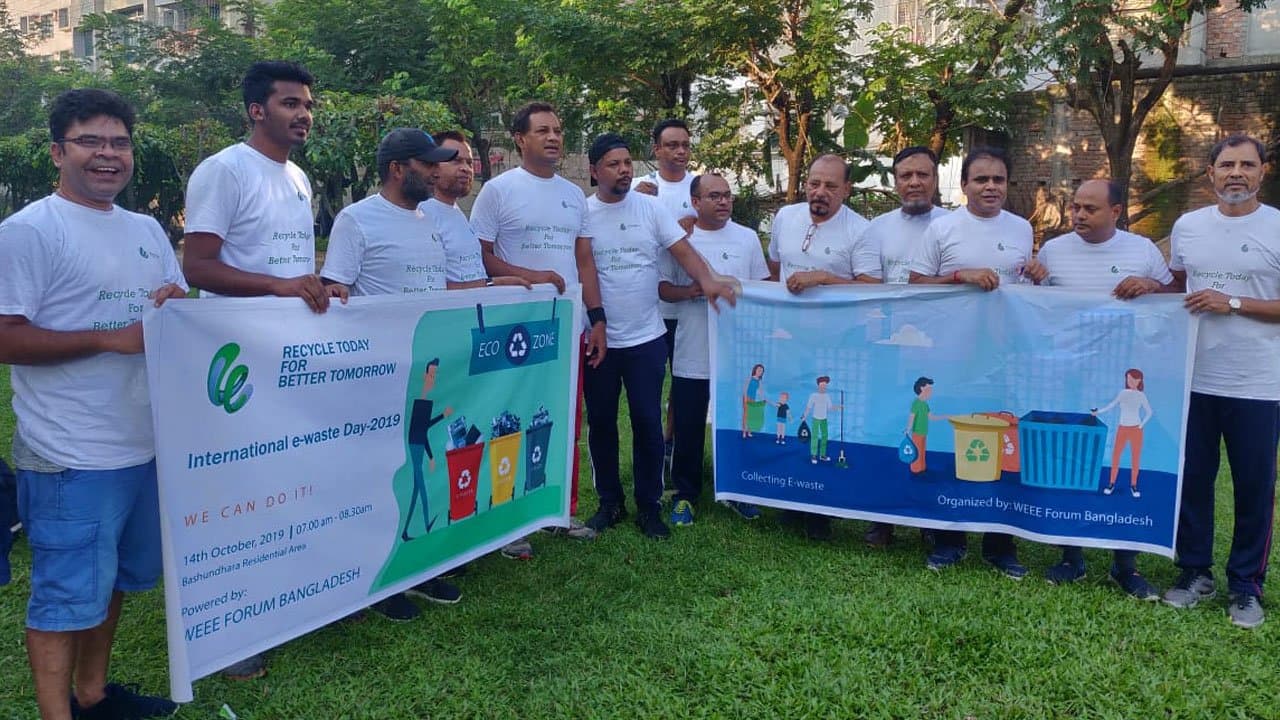
11 Program Areas
Comprehensive action across every dimension of the e-waste challenge.
E-Waste Collection
Operating drop-off points and scheduled pickup services for households, businesses, and institutions to safely dispose of electronic waste.
Safe Processing
Certified dismantling and material recovery operations that meet international environmental and occupational health standards.
Public Awareness
Nationwide campaigns, school programs, and community workshops to educate citizens about the hazards of improper e-waste disposal.
Policy Advocacy
Engaging with Parliament, MOEF, and BTRC to develop and implement comprehensive e-waste regulations aligned with the Basel Convention.
Extended Producer Responsibility
Working with electronics manufacturers and importers to establish take-back programs and producer responsibility frameworks.
Research & Data
Publishing annual e-waste generation reports, composition studies, and environmental impact assessments to inform evidence-based policy.
Informal Sector Integration
Supporting the safe transition of informal e-waste workers into the formal economy through training, certification, and economic inclusion.
Capacity Building
Training programs for government officials, industry professionals, and civil society organizations on e-waste management best practices.
International Collaboration
Partnering with UNEP, WHO, PACE, and regional bodies to align Bangladesh's approach with global standards and access technical support.
Circular Economy
Promoting product design for longevity, repairability, and recyclability — encouraging manufacturers to adopt circular economy principles.
Community Health
Health monitoring and environmental remediation programs in communities affected by informal e-waste recycling activities.